If you’re looking to start or grow a thriving community of game developers, you’re probably going to want to take a page from the notebook of Seattle Indies Executive Director Tim Cullings. From his time in indie and AAA gaming to his time running the biggest indie game development organization in North America, Tim is a passionate organizer who constantly organizes organizers, trying to bring energy to the people educating the next generation of game developers, people creating the next generation of studios, and people who just need some support with a nasty bug in their engine. This conversation dives into some of your favorite games and studios you might not have known were local to Seattle, some conferences you might not have discovered, and insights for anyone looking for a game dev community to join or start on their own.
Listen Now: Enduring Play Season 2 Episode 5
Key Quotes
“I would probably suggest that people who are just in the early phases of starting a community is to look at IGDA and consider that as a good option to help you get off the ground. Then there’s other events, like Global Game Jam. I also used to be the executive director there. If you don’t want to start a whole entire community, you can at least just apply to run a Global Game Jam site. Every year, they make it super easy. I had never really even been to a game jam before when I first hosted our first site here in Seattle back in 2016 and I just followed all of the documentation that they sent me, and it went great.”
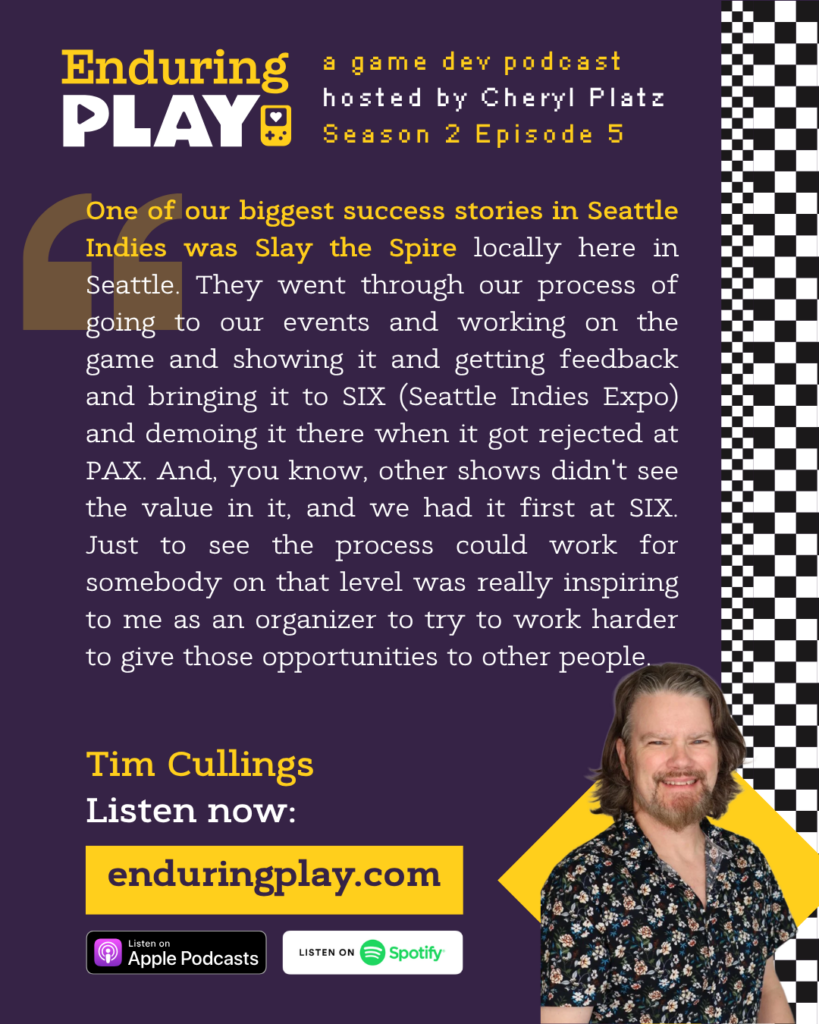
“One of our biggest success stories in Seattle Indies was Slay the Spire locally here in Seattle. They went through our process of going to our events and working on the game and showing it and getting feedback and bringing it to SIX (Seattle Indies Expo) and demoing it there when it got rejected at PAX. And, you know, other shows didn’t see the value in it, and we had it first at SIX. Just to see the process could work for somebody on that level was really inspiring to me as an organizer to try to work harder to give those opportunities to other people.”
“The founders club events that we started last year focused on studio and company founders having frank and open discussions about the business of making video games, which is something that indies don’t really talk about ever. They just want to talk about the cool game they’re working on, and that’s understandable. It’s their art, it’s their passion. But you know, business is a part of it, too: if you’re trying to make this your living. We have a lot of great people with great experience here in Seattle that are very willing to generously give their time and wisdom to share to try to help other people do the same thing. We kind of have “co-opetition,” I call it here. Everybody wants to be the best, but they also want to see everybody else do well too, because the rising tide lifts all the boats around here.”
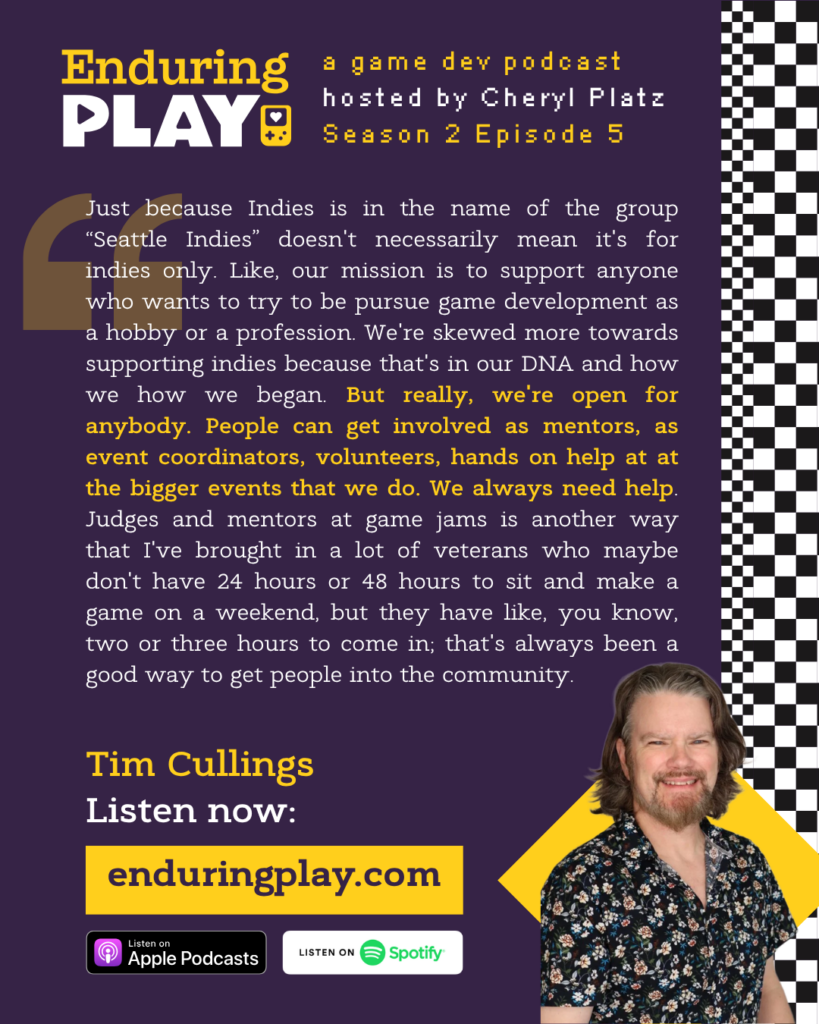
“Just because Indies is in the name of the group “Seattle Indies” doesn’t necessarily mean it’s for indies only. Like, our mission is to support anyone who wants to try to be pursue game development as a hobby or a profession. We’re skewed more towards supporting indies because that’s in our DNA and how we how we began. But really, we’re open for anybody. People can get involved as mentors, as event coordinators, volunteers, hands on help at at the bigger events that we do. We always need help. Judges and mentors at game jams is another way that I’ve brought in a lot of veterans who maybe don’t have 24 hours or 48 hours to sit and make a game on a weekend, but they have like, you know, two or three hours to come in; that’s always been a good way to get people into the community.”
Share on Social Media
Follow Enduring Play on your favorite platform