Video games take years to develop, but often game studios make choices as if they’re going to be hiring for months at a time. The failure to build in the systems that support the people at a studio – hiring, management support, career frameworks, company values and goals – are failures to thrive that can harm your studio at the moment you need the support the most, when you’re about to pivot to broad scale. Amy White has served as Director of People of Fusebox Games as they doubled in size from the crucial 26 to 48 person size, and during that time they had one voluntary departure in three years. What’s the secret? In this episode, we explore everything from the Commodore 64 to curb cuts and the Ninja Turtles to referral programs as we try to chart a course for thriving studios of all sizes.
Listen Now: Enduring Play Season 2 Episode 6
Key Quotes
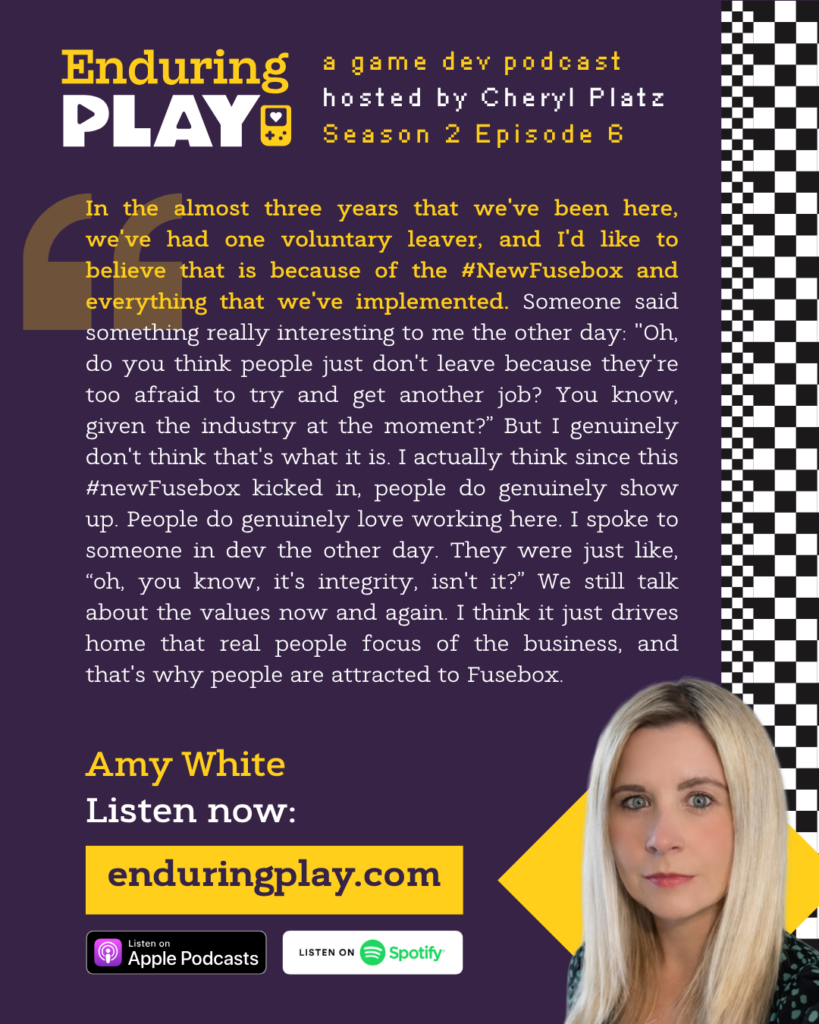
“In the almost three years that we’ve been here, we’ve had one voluntary leaver, and I’d like to believe that is because of the #NewFusebox and everything that we’ve implemented. Someone said something really interesting to me the other day: “Oh, do you think people just don’t leave because they’re too afraid to try and get another job? You know, given the industry at the moment?” But I genuinely don’t think that’s what it is. I actually think since this #newFusebox kicked in, people do genuinely show up. People do genuinely love working here. I spoke to someone in dev the other day. They were just like, “oh, you know, it’s integrity, isn’t it?” We still talk about the values now and again. I think it just drives home that real people focus of the business, and that’s why people are attracted to Fusebox.”
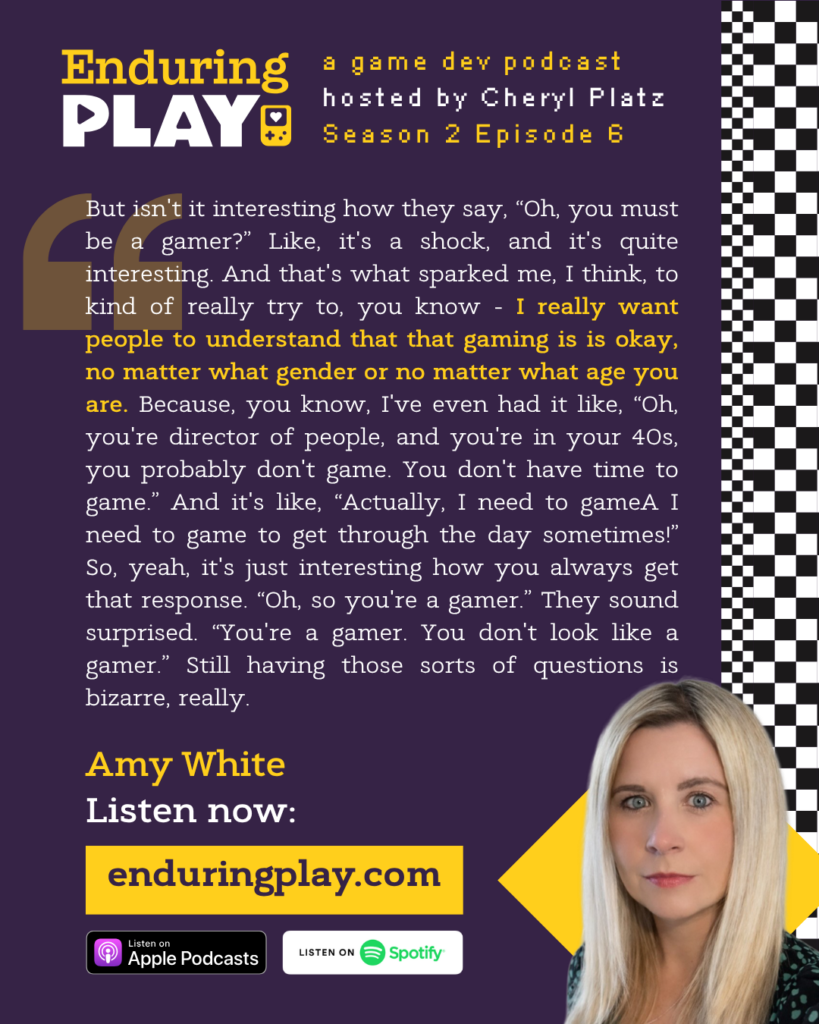
“But isn’t it interesting how they say, “Oh, you must be a gamer?” Like, it’s a shock, and it’s quite interesting. And that’s what sparked me, I think, to kind of really try to, you know – I really want people to understand that that gaming is is okay, no matter what gender or no matter what age you are. Because, you know, I’ve even had it like, “Oh, you’re director of people, and you’re in your 40s, you probably don’t game. You don’t have time to game.” And it’s like, “Actually, I need to gameA I need to game to get through the day sometimes!” So, yeah, it’s just interesting how you always get that response. “Oh, so you’re a gamer.” They sound surprised. “You’re a gamer. You don’t look like a gamer.” Still having those sorts of questions is bizarre, really.”
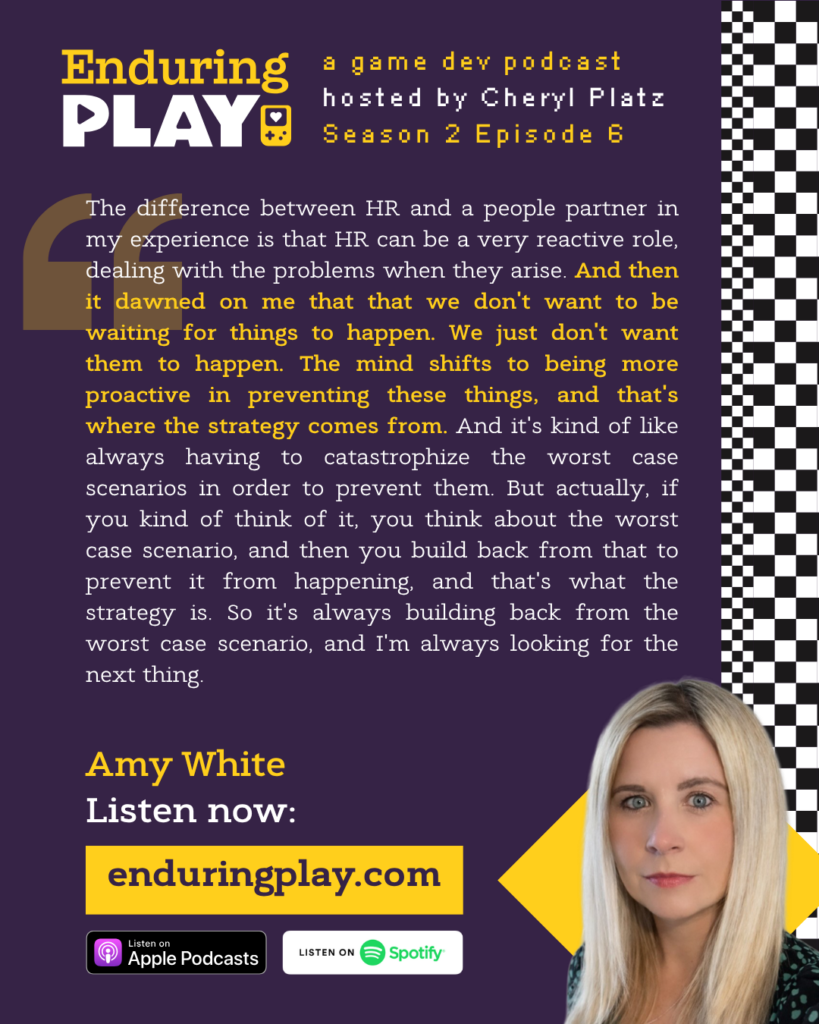
“The difference between HR and a people partner in my experience is that HR can be a very reactive role, dealing with the problems when they arise. And then it dawned on me that that we don’t want to be waiting for things to happen. We just don’t want them to happen. The mind shifts to being more proactive in preventing these things, and that’s where the strategy comes from. And it’s kind of like always having to catastrophize the worst case scenarios in order to prevent them. But actually, if you kind of think of it, you think about the worst case scenario, and then you build back from that to prevent it from happening, and that’s what the strategy is. So it’s always building back from the worst case scenario, and I’m always looking for the next thing.”
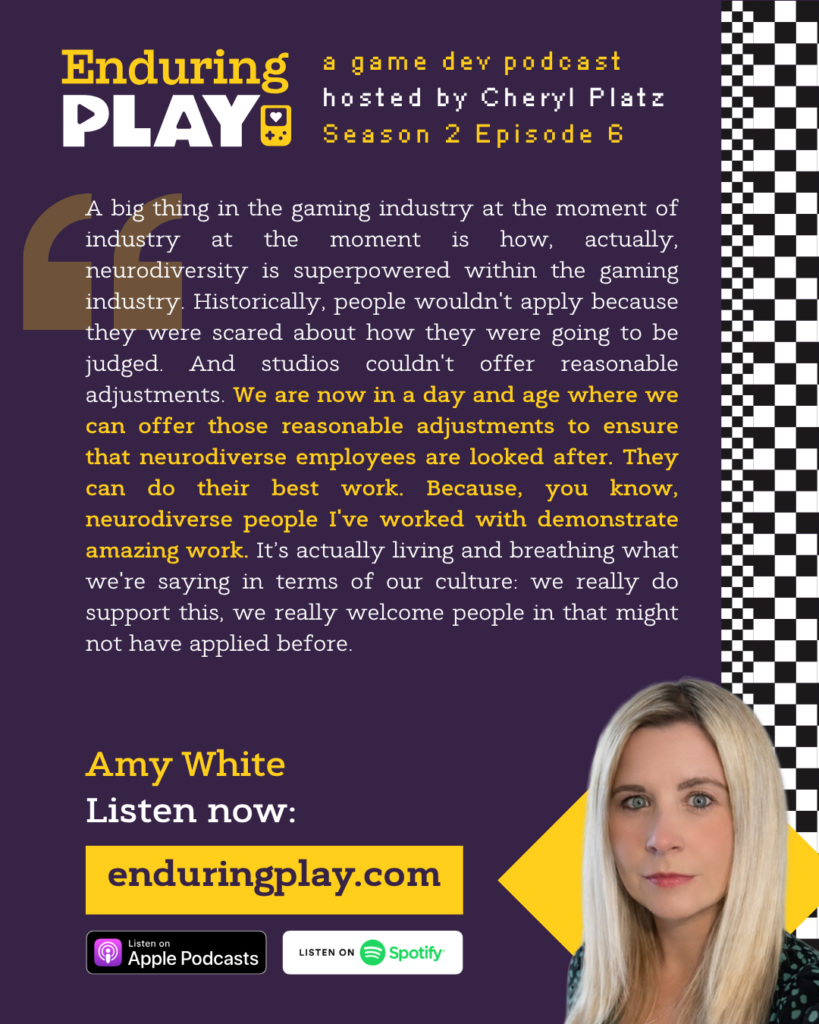
“A big thing in the gaming industry at the moment of industry at the moment is how, actually, neurodiversity is superpowered within the gaming industry. Historically, people wouldn’t apply because they were scared about how they were going to be judged. And studios couldn’t offer reasonable adjustments. We are now in a day and age where we can offer those reasonable adjustments to ensure that neurodiverse employees are looked after. They can do their best work. Because, you know, neurodiverse people I’ve worked with demonstrate amazing work. It’s actually living and breathing what we’re saying in terms of our culture: we really do support this, we really welcome people in that might not have applied before.”
Social Media Images
Follow Enduring Play on your favorite platform