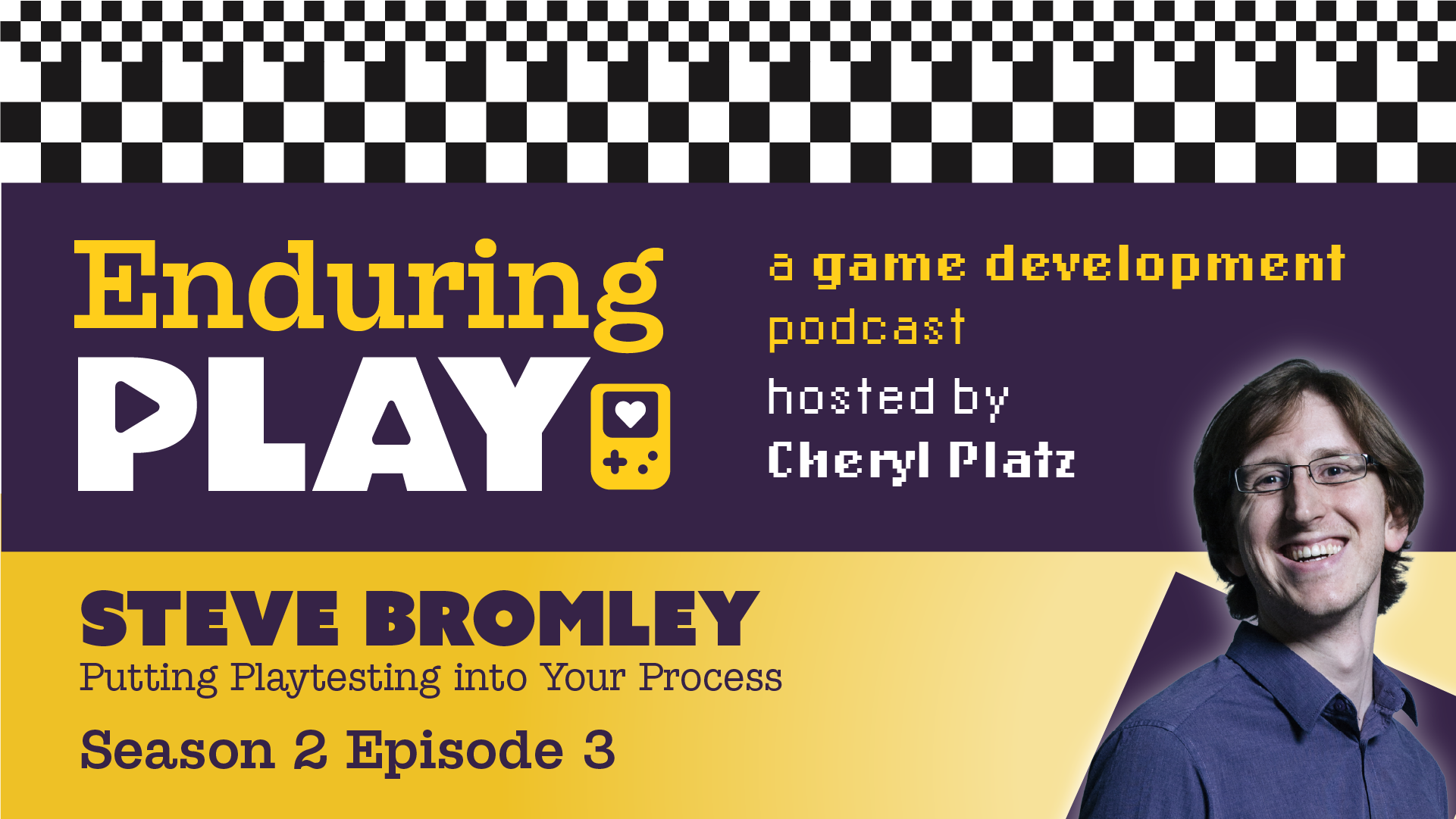
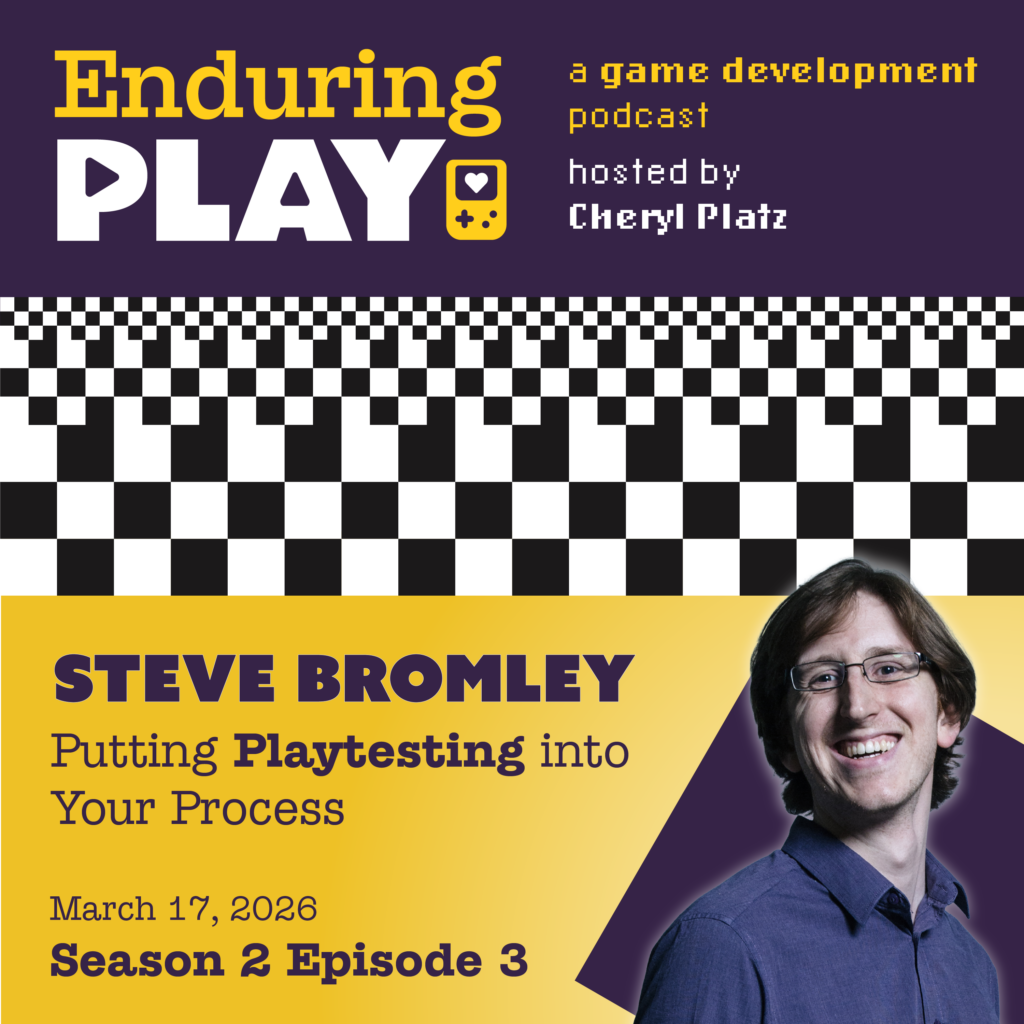
You don’t need to be a games user researcher to confront the need for playtesting in your video game. All game developers, from solopreneurs to indies to AAAs will have to put their games in front of players at some point, hoping to learn from the experience. Steve Bromley is one of the world’s foremost experts on the art of video game playtesting, and for over a decade he’s been mentoring future generations of games user researchers through the International Game Developers Association and his own books and classes. In this week’s episode, get insight from Steve that you can apply regardless of your level of training – but if you’re curious about games user research as a career, there’s community and next steps for you here, too.
Engage with this episode now
Key Quotes
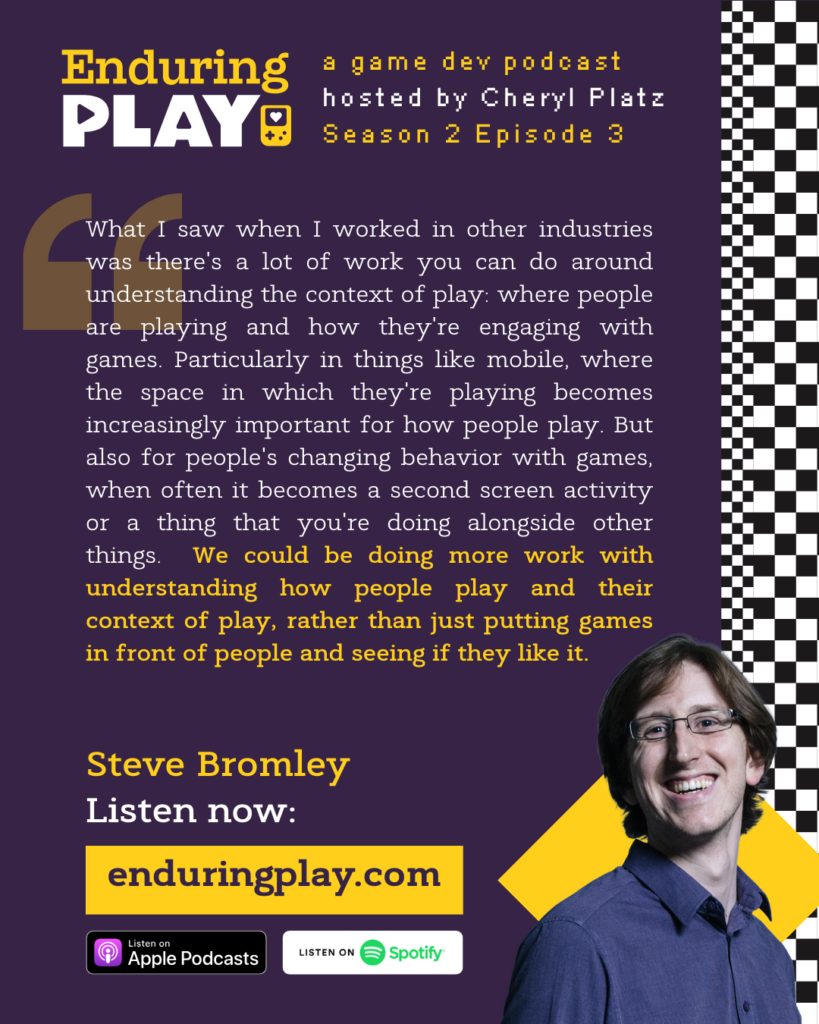
“What I saw when I worked in other industries was there’s a lot of work you can do around understanding the context of play: where people are playing and how they’re engaging with games. Particularly in things like mobile, where the space in which they’re playing becomes increasingly important for how people play. But also for people’s changing behavior with games, when often it becomes a second screen activity or a thing that you’re doing alongside other things. We could be doing more work with understanding how people play and their context of play, rather than just putting games in front of people and seeing if they like it.“
“I do a lot of work on VR titles as well, where you can think about the physical space very unique to their context and their living room and their living situation. Testing in a lab where everything is perfect doesn’t necessarily represent what real life could be. It was a while ago now, but you’re probably familiar with Microsoft’s Kinect, and a lot of the work and the research behind that was done in the USA, where they have very large living rooms. The actual space that many people in the UK have or in Japan is a lot smaller than those games were designed for causing issues actually physically being able to play them.”
“(My book How To Be A Games User Researcher) talks about the process of “how do you actually plan and run a play test using best practices from picking methods or recruiting participants?” And in the game industry, as you know, a lot of people who are doing other roles just have to organize a playtest alongside what they’re doing. So they’re a producer or a designer or a UX designer, and they just have to run a playtest and aren’t necessarily given guidance on how to do it. What I found was they were very receptive to the book, even though they’re not the primary audience for it.”
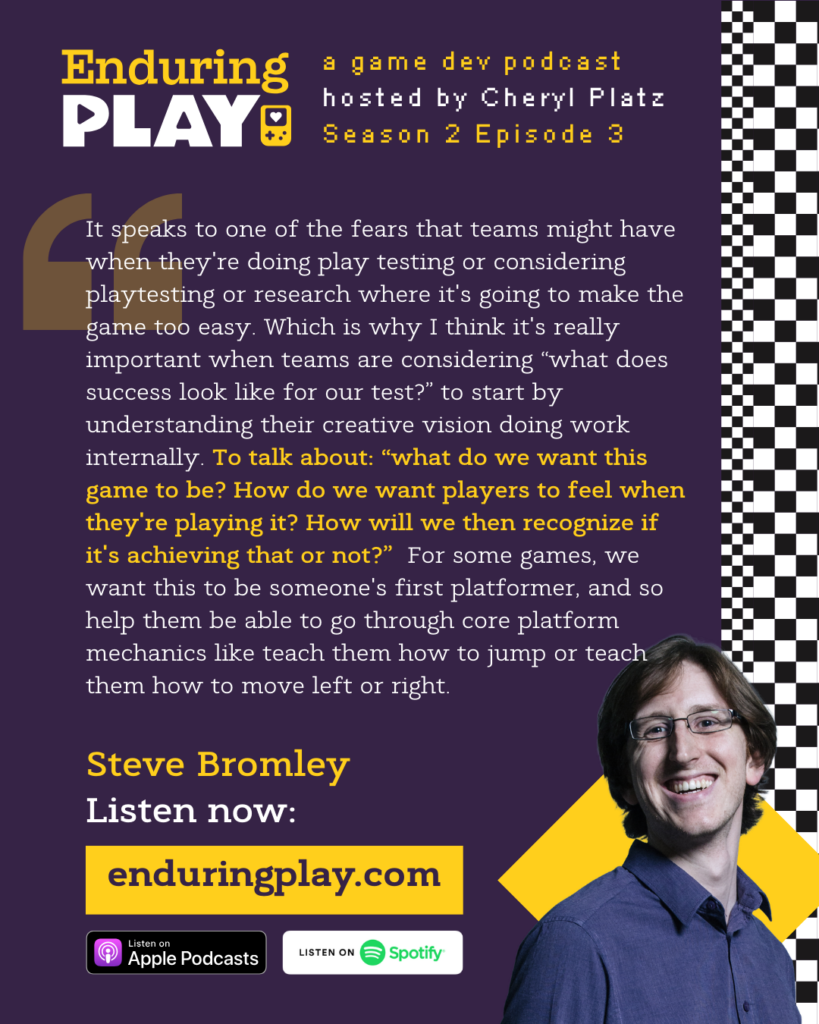
“It speaks to one of the fears that teams might have when they’re doing play testing or considering playtesting or research where it’s going to make the game too easy. Which is why I think it’s really important when teams are considering “what does success look like for our test?” to start by understanding their creative vision doing work internally. To talk about: “what do we want this game to be? How do we want players to feel when they’re playing it? How will we then recognize if it’s achieving that or not?” For some games, we want this to be someone’s first platformer, and so help them be able to go through core platform mechanics like teach them how to jump or teach them how to move left or right.”
Social Media Gallery
Follow Enduring Play on your favorite platform
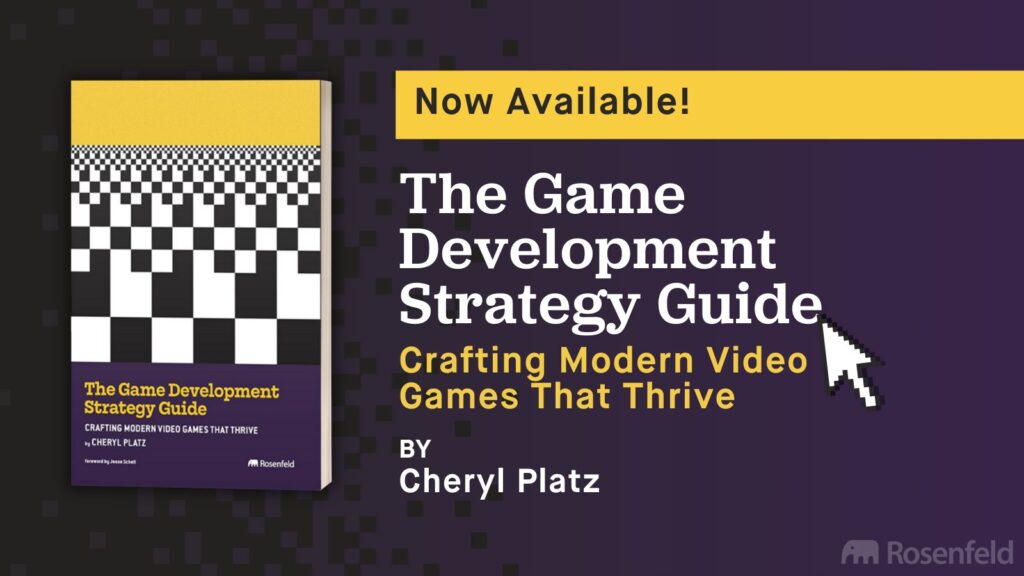
About The Game Development Strategy Guide
Enduring Play is the companion podcast to The Game Development Strategy Guide: Crafting Modern Video Games that Thrive. Season 1 features the interviews that inspired the book, and Season 2 expands our understanding of how to create sustainable gaming experiences. The book is available at all major online booksellers and at publisher Rosenfeld Media’s website.
Use code ENDURINGPLAYS2 at RosenfeldMedia.com to get 15% off your order – and all physical orders at Rosenfeld Media receive a free ebook. Podcast Season 2 offer expires July 31, 2026.
DISCOUNT CODE
ENDURINGPLAYS2